![Bluestone_PIM_white_logo_RBB-3.png]](https://help.bluestonepim.com/hs-fs/hubfs/Bluestone_PIM_white_logo_RBB-3.png?height=50&name=Bluestone_PIM_white_logo_RBB-3.png)
You must be given explicit access to manage permissions.
Managed role having access: System admin.
UI permissions API permissions
Introduction
Defining permissions is key to maintaining a secure, well-governed PIM environment. This article covers how to assign both UI permissions (what users see and do in the interface) and API permissions to roles within your organization.
Please note: You can only assign or unassign permissions for custom roles. Any roles marked with a padlock icon are built-in and system-managed by Bluestone PIM, meaning their baseline security configurations cannot be altered.
Please see Roles and policies management to learn how to create custom roles for your organization.
UI permissions
Do the following to assign/unassign UI permissions for a role:
- Go to Settings | Access Management from the main navigation bar.
- Select Roles.
- Click the role in question.
- For the different main entities (e.g. Dashboard and Products), assign/unassign relevant permissions by using the toggles to the right.
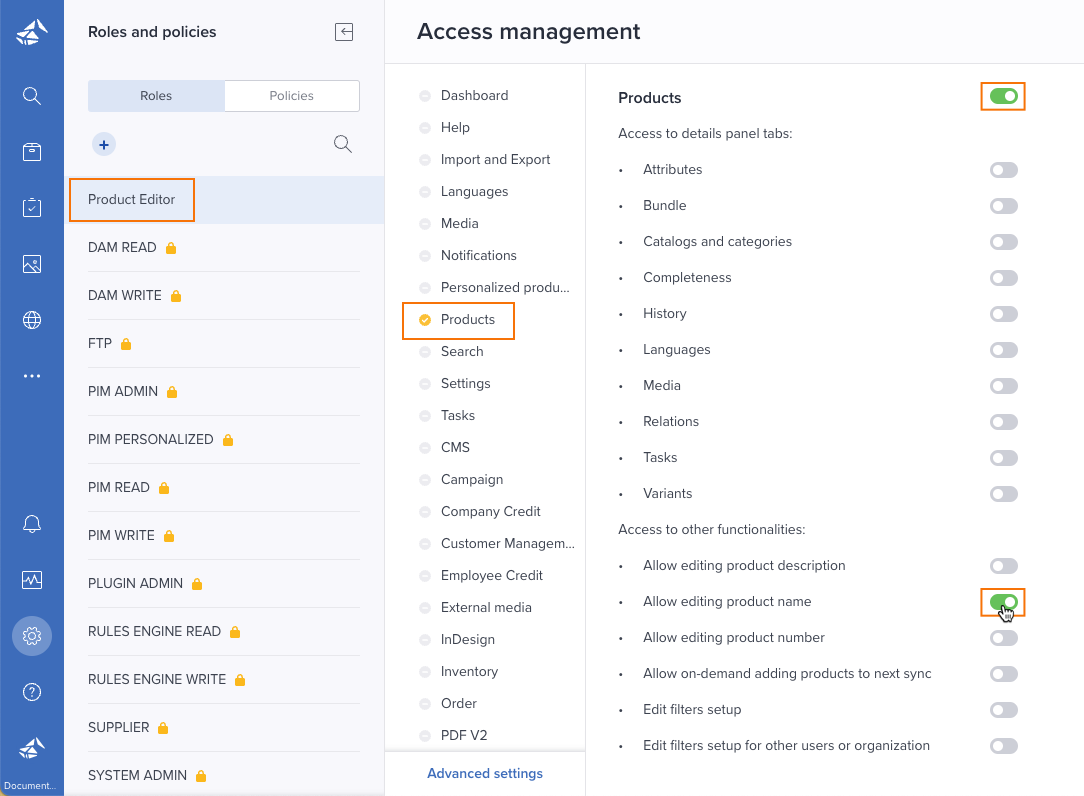
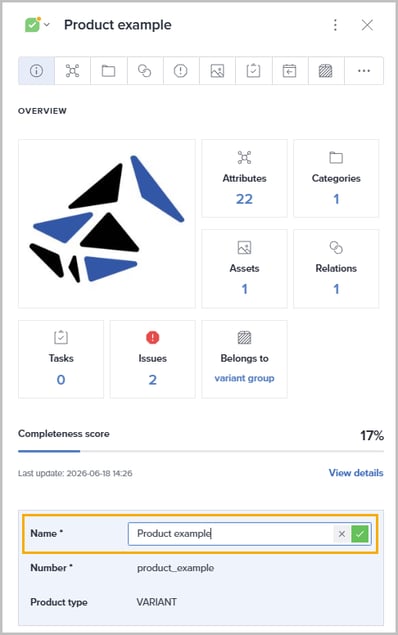
An example of a UI permission is Allow editing product name. When activated, users having this role can edit product names:
API permissions
Through advanced settings, you can configure highly detailed API permissions for each specific role. If you notice that certain API permissions are disabled or greyed out, it is because they are actively required by the UI permissions enabled on the Access management page. To turn these dependent permissions off, you must first adjust the permission settings on the main page.
Do the following to assign/unassign API permissions for a role:
-
From the Access management page, click Advanced settings at the bottom.
The following page is presented: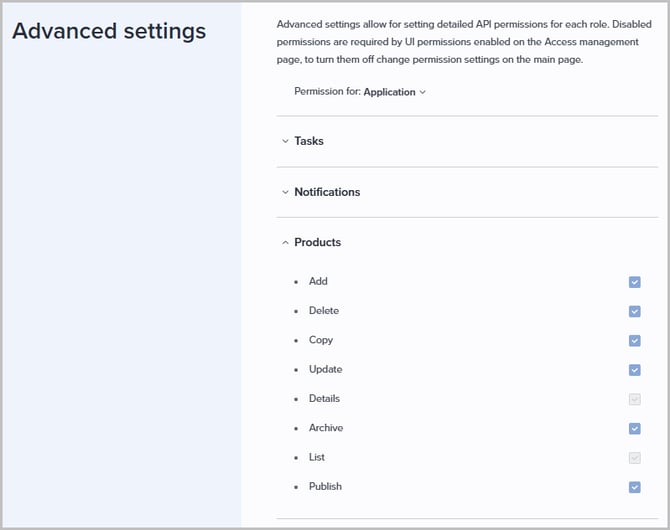
-
For the different main entities (e.g. Dashboard and Products), expand the section and assign/unassign relevant permissions by using the checkboxes to the right.